Choosing between a semi-automatic and a fully automatic potato chip production line is one of the most important decisions you will make when entering or scaling your snack manufacturing business. The wrong choice leads to wasted capital, production bottlenecks, or missed market opportunities. The right choice positions your operation for profitable, sustainable growth.
This guide breaks down both options with honest comparisons, real numbers, and decision frameworks so you can invest with confidence.

At a Glance: Semi-automatic vs. Fully Automatic
| Factor | Semi-automatic Line | Fully Automatic Line |
|---|---|---|
| Typical Output | 50–100 kg/h | 200–300 kg/h |
| Labor Requirement | 3–5 operators | 1–2 monitors |
| Initial Investment | Low | Higher |
| Floor Space | ~15m × 4m | ~30m × 5m |
| Power Requirement | ~40 kW | ~365 kW |
| Best For | Startups, small factories, market testing | Large manufacturers, exporters, proven demand |
When a Semi-automatic Potato Chip Processing Line Makes Sense?
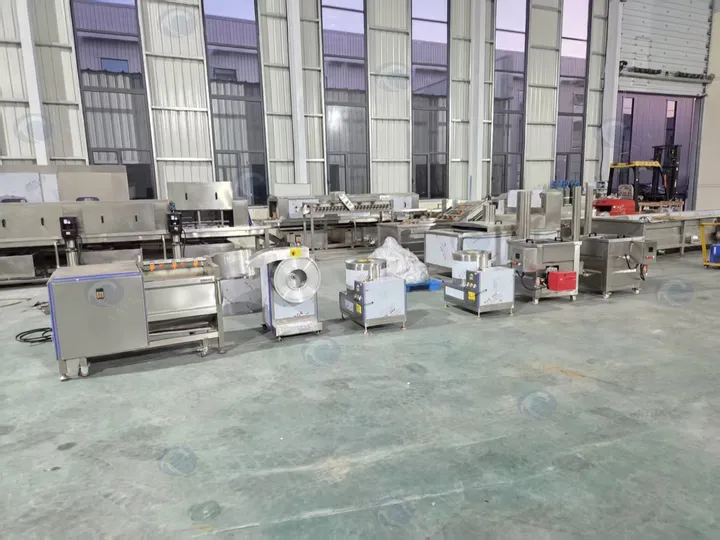
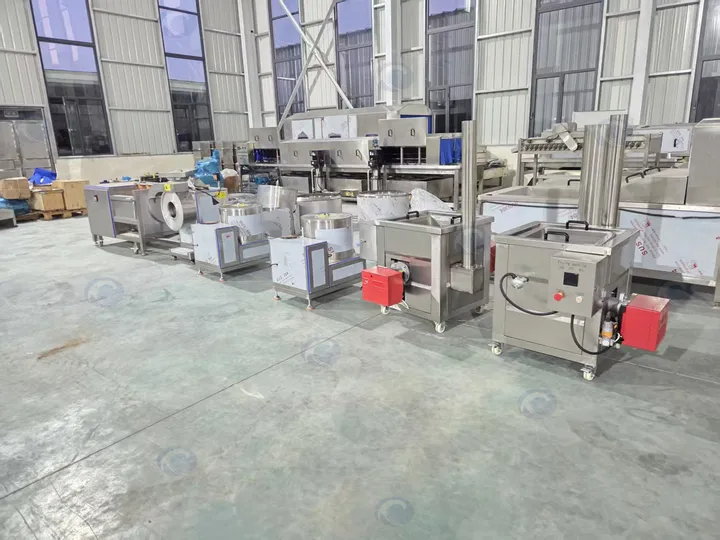
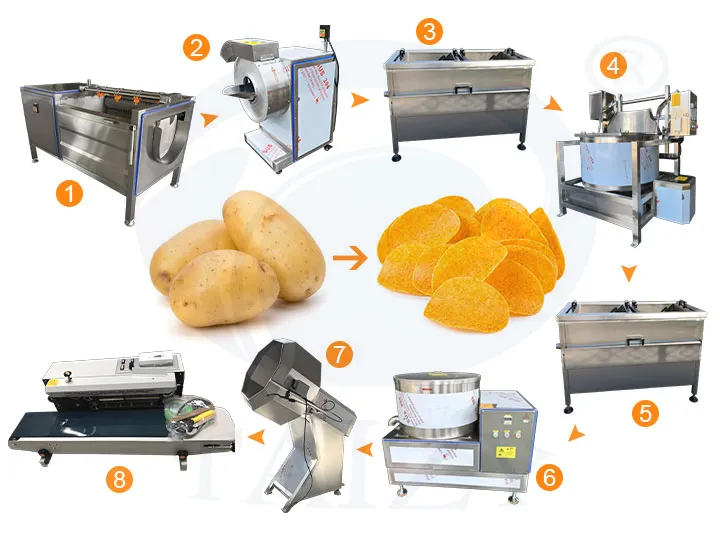
A semi-automatic potato chip processing line is the practical starting point for most new entrants. If you are launching a snack brand with limited capital, testing regional demand, or operating from a rented facility with space constraints, this tier delivers professional results without enterprise-level risk.
Key advantages include:
- Lower capital barrier: Entry-level configurations start around $8,000, making them accessible to entrepreneurs and small cooperatives.
- Operational flexibility: Manual transfer points between machines allow operators to inspect product quality at every stage, which is valuable when refining recipes or training staff.
- Simpler maintenance: Mechanical controls and standalone units mean local technicians can handle most repairs without specialized training.
- Easier relocation: Compact equipment can be disassembled and moved if your facility changes, which matters for startups operating on short-term leases.
The trade-off is labor intensity. At 50–100 kg/h, you need several workers managing feeding, transfer, sorting, and packaging. As order volumes grow, labor costs and human inconsistency become limiting factors.
When to Upgrade to a Fully Automatic Potato Chip Making Machine?
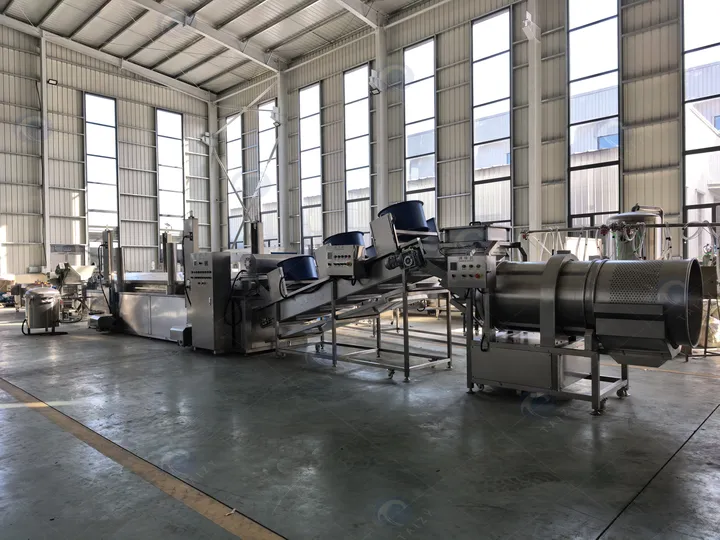
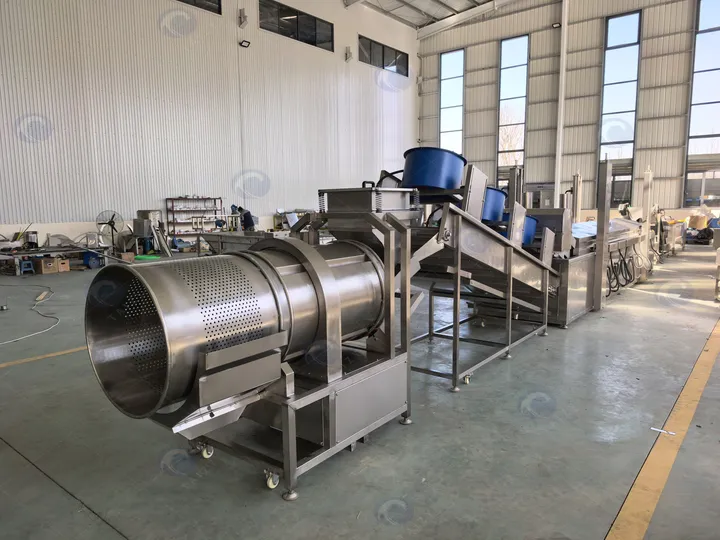
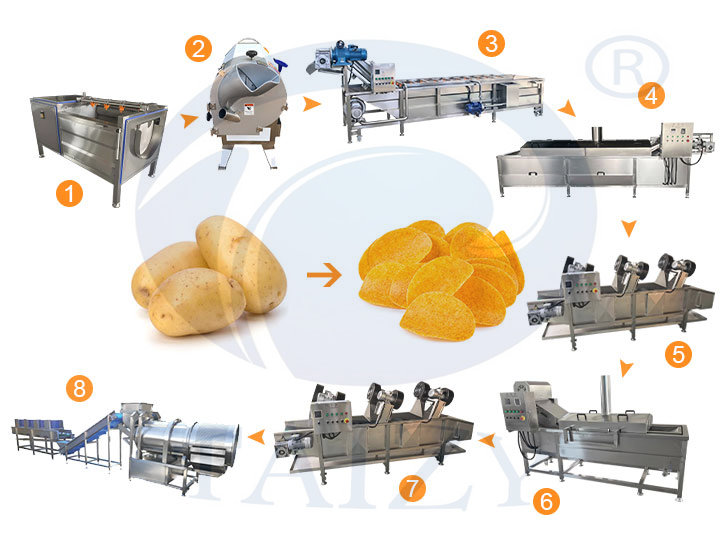
A fully automatic potato chip making machine is built for volume and consistency. Once you have proven product-market fit, secured retail contracts, or identified export opportunities, automation becomes a competitive necessity rather than a luxury.
Key advantages include:
- Massive throughput: At 200–300 kg/h, a single shift produces 1.6 to 2.4 tons of finished chips daily.
- Labor cost savings: Automated conveyors and integrated controls reduce staffing from five people to one or two monitors, freeing labor budget for sales and distribution.
- Product consistency: Precise temperature controls, fixed conveyor speeds, and standardized processing times eliminate batch-to-batch variation.
- Food safety: Minimal human contact with product during processing reduces contamination risk and supports certifications required by major retailers.
The higher price tag and industrial power requirements mean this tier demands proper planning. You need adequate floor space, three-phase electrical service, and a reliable sales pipeline to keep the line running at capacity.
5 Questions to Determine the Right Fit
1. What is your daily production target?
If your market requires less than 500 kg of chips per day, a semi-automatic line covers your needs. If you are supplying supermarkets, institutions, or export buyers demanding multiple tons weekly, automation is the only viable path.
Look beyond the equipment sticker price. Factor in shipping, import duties, electrical installation, raw materials for testing, and working capital. A semi-automatic line may leave you with more cash reserves for marketing and distribution in the critical first year.
3. How much labor can you reliably access?
In regions with low wage costs and abundant workers, semi-automatic operation is economically viable. Where labor is expensive, regulated, or unreliable, automation pays for itself rapidly through reduced headcount.
4. Do you have confirmed orders or are you testing demand?
Never buy a 300 kg/h line on speculation. If you have signed purchase orders or letters of intent from distributors, invest in automation. If you are still validating flavors and pricing, start semi-automatic and upgrade once demand is proven.
5. What is your facility situation?
Fully automatic lines require approximately 30 meters of linear space plus packaging and storage areas. If your current building cannot accommodate this, either expand or select a semi-automatic configuration that fits.
Common Mistakes Buyers Make
Buying too big too soon
New producers sometimes overestimate initial demand and purchase an automatic line that sits idle. Idle equipment destroys capital efficiency and morale. Start with what you can sell today, not what you hope to sell in three years.
Ignoring operating costs
A 15,000 semi-automatic line with high labor requirements may cost more per kilogram produced than an 80,000 automatic line with minimal staffing. Calculate total cost per unit, not just purchase price.
Neglecting after-sales support
The cheapest quotation is rarely the best value. Verify that your supplier provides English documentation, video support, spare parts availability, and responsive technical assistance before you commit.
Can You Start Semi-automatic and Upgrade Later?
Yes. Many successful producers begin with a semi-automatic potato chip processing line and transition to full automation as revenue stabilizes. The key is choosing a modular system from a supplier who designs equipment with upgrade paths in mind.
Some manufacturers offer trade-in programs or buy-back arrangements for existing equipment, reducing the net cost of upgrading. When evaluating suppliers, ask specifically about their policy for clients who outgrow their initial configuration.
Final Recommendation
If you are a startup, entrepreneur, or small factory with limited capital and unproven demand, choose a semi-automatic potato chip processing line. It delivers commercial-grade product quality at an accessible price point while preserving capital for marketing and growth.
If you operate an established snack business with confirmed orders, export requirements, or retail distribution contracts, invest in a fully automatic potato chip making machine. The labor savings, consistency, and capacity will compound into a decisive competitive advantage.
Still unsure which potato chip production line fits your operation? Contact our engineering team with your target output, budget range, and facility details. We will recommend the exact configuration that matches your business stage and growth goals.