If you are planning to buy a fryer for your food business, you may wonder whether a batch fryer or a continuous fryer is the better choice. The short answer depends on your production volume, product type, and budget. Batch fryers are ideal for small-to-medium operations that need flexibility. Continuous fryers are built for high-volume, non-stop production.
Both machine types can produce excellent fried foods. The difference lies in how they handle product flow, labor, and output consistency. This guide compares batch fryers and continuous fryers side by side. It will help you choose the right commercial fryer for your business.
What Is a Batch Fryer?
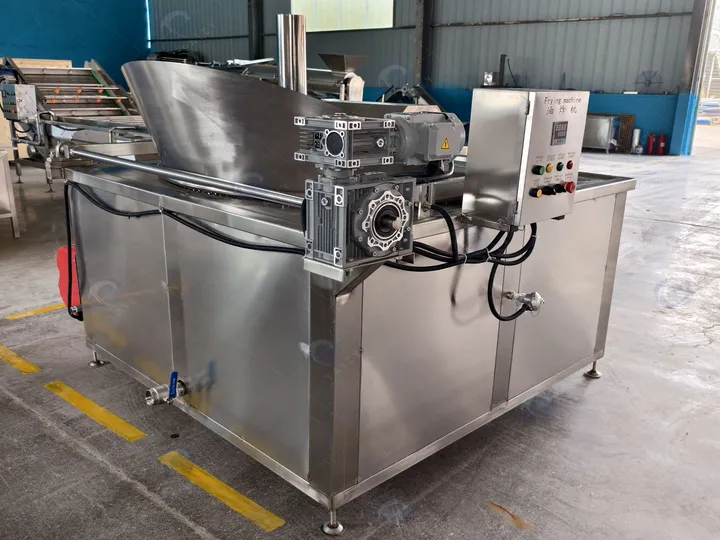
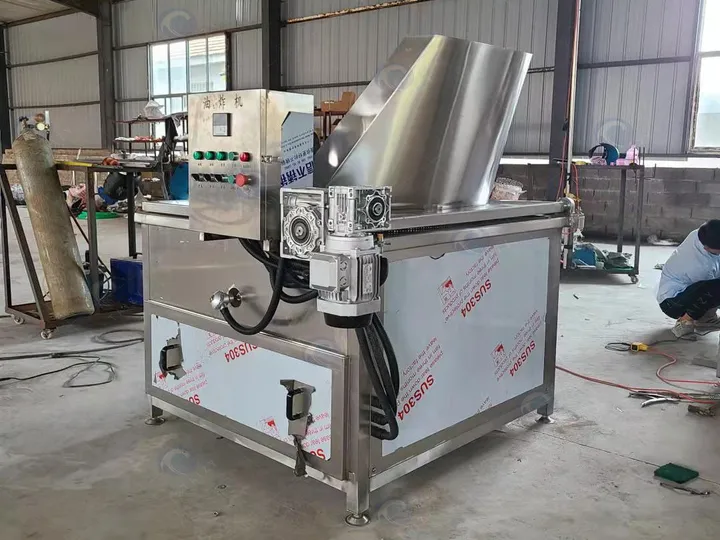
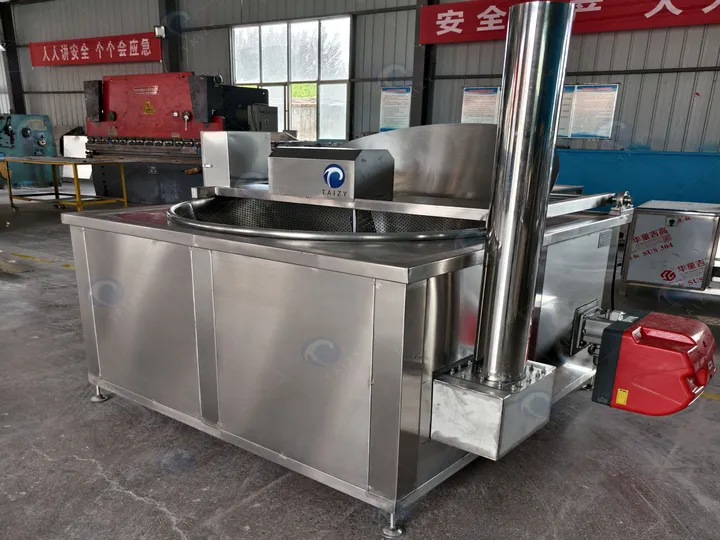
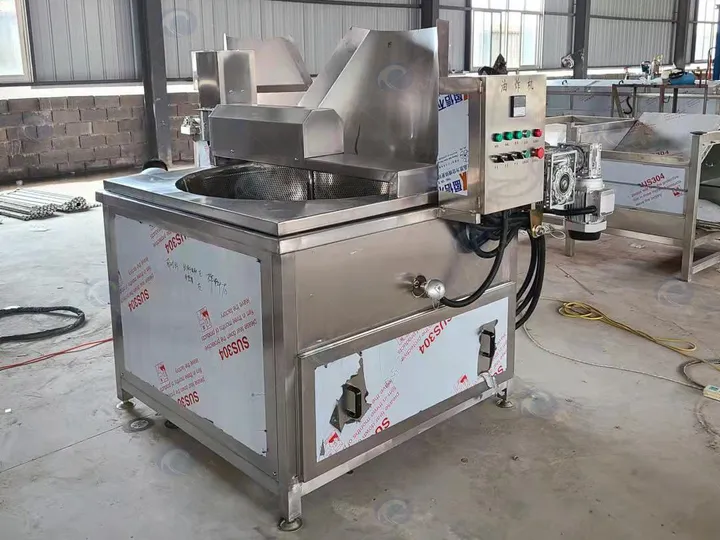
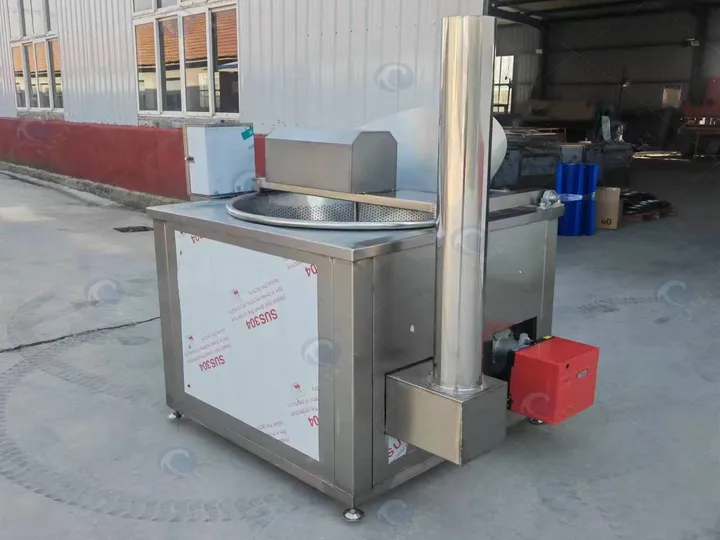
A batch fryer cooks food in fixed loads. You load a basket, fry it, and remove it when the cycle ends. An automatic batch fryer adds stirring, temperature control, and automatic discharge to reduce manual work.
Our batch fryer models come in gas and electric versions. They use oil-water separation to keep oil clean and extend oil life. The machine supports temperatures from 0 °C to 230 °C and handles products such as potato chips, French fries, fried chicken, meatballs, plantain chips, and pastries.
Batch fryers are compact. They fit small workshops and central kitchens. They are also easy to clean between product changes, which makes them a good choice for businesses that fry multiple items in one day.
What Is a Continuous Fryer?
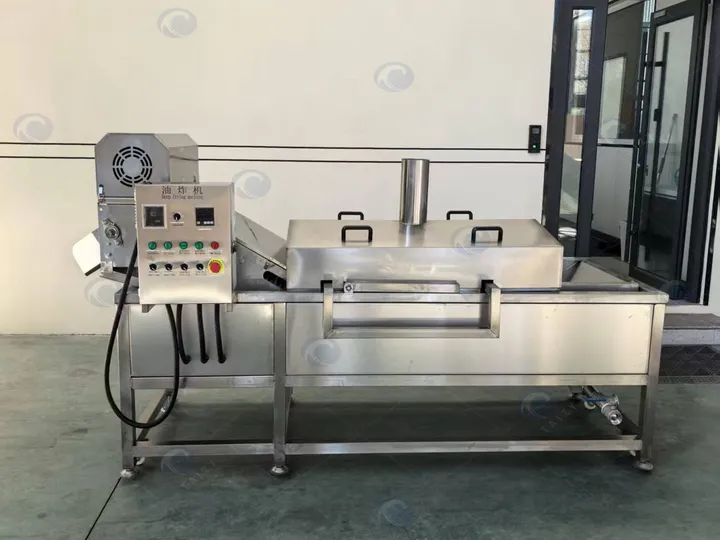
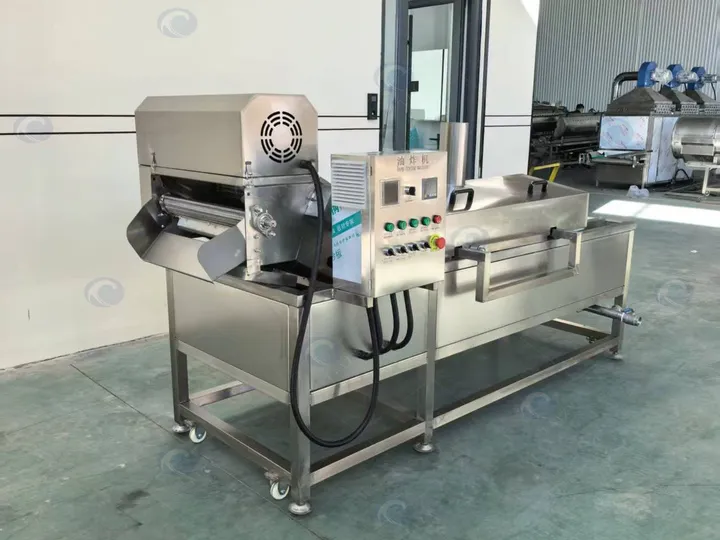
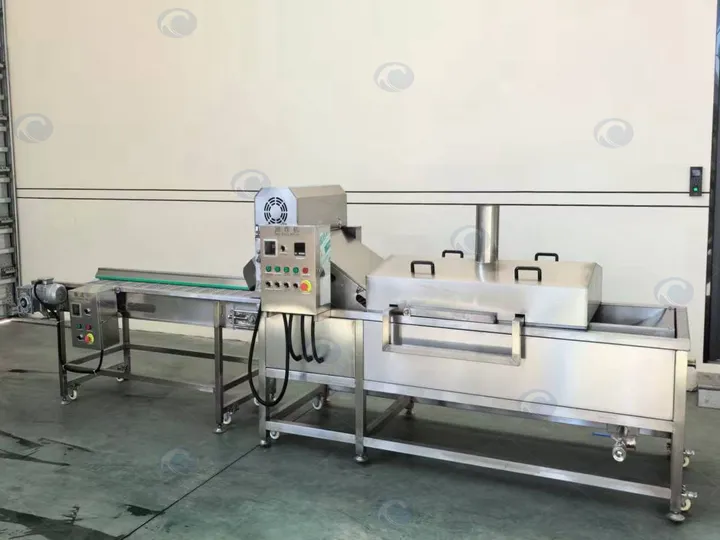
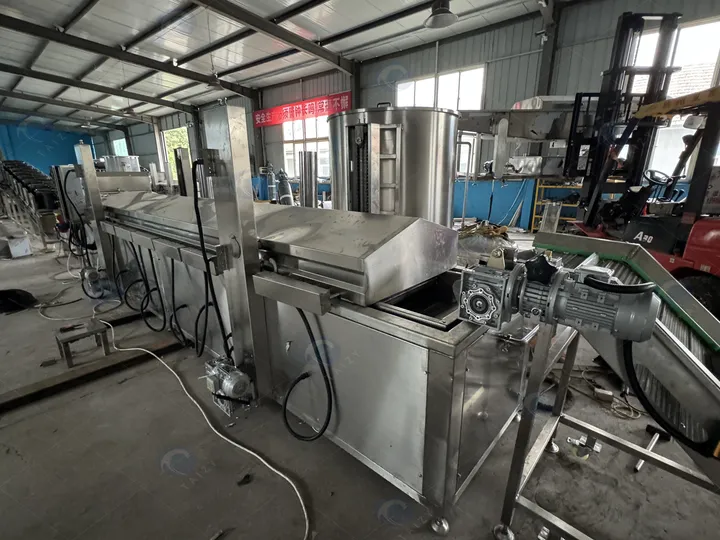
A continuous fryer moves product through hot oil on a mesh belt. Products enter at one end, travel through the heated oil zone, and exit fully cooked at the other end. There is no stop-start cycle between loads.
The continuous frying machine from Fryingline handles 100–800 kg/h depending on the model. Frying temperature ranges from 160 °C to 260 °C with ±1 °C accuracy. It is built for potato chips, French fries, plantain chips, pork rinds, spring rolls, battered poultry, and coated snacks.
Unlike a batch fryer, a continuous fryer runs non-stop. This makes it the better choice for factories, large distributors, and export-oriented processors that need steady output.
Batch Fryer vs Continuous Fryer: Key Differences
| Factor | Batch Fryer | Continuous Fryer |
|---|---|---|
| Production style | Fixed batches per cycle | Non-stop conveyor flow |
| Typical capacity | 10–100 kg per batch | 100–800 kg/h continuous |
| Labor needs | One operator per batch cycle | Lower labor per kilogram |
| Product consistency | High within each batch | Uniform across all output |
| Product flexibility | Easy to switch recipes | Best for steady product runs |
| Heating options | Gas or electric | Gas or electric |
| Oil cleaning | Oil-water separation, manual drain | Automatic slag removal during operation |
| Cleaning access | Compact tank, simple drain | Independent lift hood and belt frame |
| Floor space | Small to medium | Longer footprint |
| Initial investment | Lower | Higher |
When to Choose a Batch Fryer?
A batch fryer is the right choice if your operation matches one or more of these points:
- You produce small-to-medium volumes each day.
- You fry several different products in one shift.
- You often test new recipes or seasonal flavors.
- Your workshop has limited floor space.
- Your budget is lower and you want a simple machine.
Batch fryers work well for restaurants, catering businesses, central kitchens, and small snack startups. The automatic stirring and oil-water separation design also reduce oil waste, which helps control running costs.
When to Choose a Continuous Fryer?
A continuous fryer is the better option if your operation matches one or more of these points:
- You need high output for supermarkets, distributors, or export.
- You run the same product for long production shifts.
- You want lower labor cost per kilogram.
- You need consistent color, texture, and moisture.
- You have enough workshop length for the conveyor system.
Continuous fryers are common in large snack factories, frozen food plants, and foodservice supply chains. They are the core of most automatic frying lines.
Cost Comparison
A batch fryer usually has a lower purchase price. It needs less floor space and fewer support systems. This makes it attractive for startups and small businesses.
A continuous fryer costs more upfront. However, it produces more output per hour and needs less labor per kilogram. Over time, the higher throughput often offsets the initial investment.
When comparing costs, look at total cost of ownership. Include the machine price, energy use, oil consumption, labor, maintenance, and spare parts. A cheap batch fryer may cost more per kilogram than a continuous fryer if your volume is high enough.
How to Decide in 5 Steps?
Follow these steps to choose between a batch fryer and a continuous fryer:
- Calculate your daily output. If you fry less than 500 kg per day, a batch fryer may be enough. If you fry more than 500 kg per day, consider a continuous fryer.
- Count your product types. If you switch between chips, meat, and pastries, a batch fryer offers more flexibility. If you focus on one or two products, a continuous fryer is more efficient.
- Measure your workshop space. Batch fryers fit smaller rooms. Continuous fryers need length for the conveyor system.
- Check your energy supply. Both machines offer gas and electric heating. Choose the option with lower local energy costs.
- Compare total cost of ownership. Do not look at price alone. Factor in energy, oil, labor, and maintenance over three to five years.
संबंधित उपकरण
If you choose a batch fryer, you may also need:
- स्वचालित बैच फ्राइंग मशीन
- Oil Filter Machine
- एयर कूलिंग मशीन – उत्पादों को पैकेजिंग से पहले ठंडा करें
If you choose a continuous fryer, you may also need:
- सतत तलने की मशीन
- Cooling Conveyor
- मसाला बनाने की मशीन
- Packaging Machine
Are you looking for a frying machine?
Choosing between a batch fryer and a continuous fryer comes down to output, product variety, and budget. A batch fryer fits small-to-medium businesses that need flexibility. A continuous fryer fits high-volume producers that need consistent, non-stop output.
If you are still unsure which industrial frying machine is right for you, contact us for a free consultation. We can recommend the best commercial fryer based