
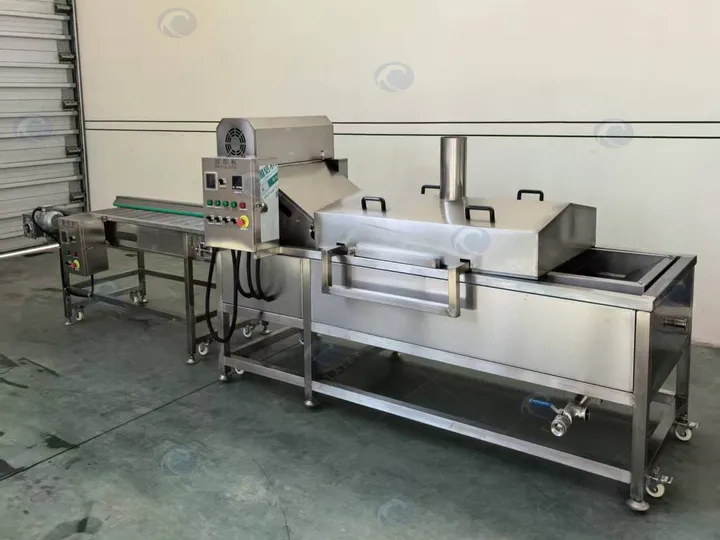
A continuous frying machine costs between $10,000 and $50,000. The final price depends on capacity, heating method, belt size, material grade, and automation level. This guide explains the cost factors and helps you choose a commercial frying machine that matches your production goals without overspending.
Note before reading: If you are interested in the machine featured in this article, please click the three contact options on the right-hand pop-up window to get in touch with us. We will provide you with a quotation within 24 hours.
What Is a Continuous Frying Machine?
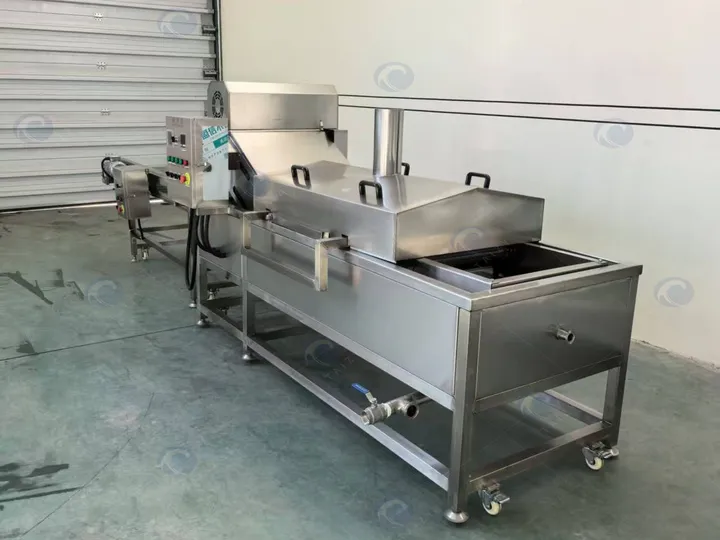
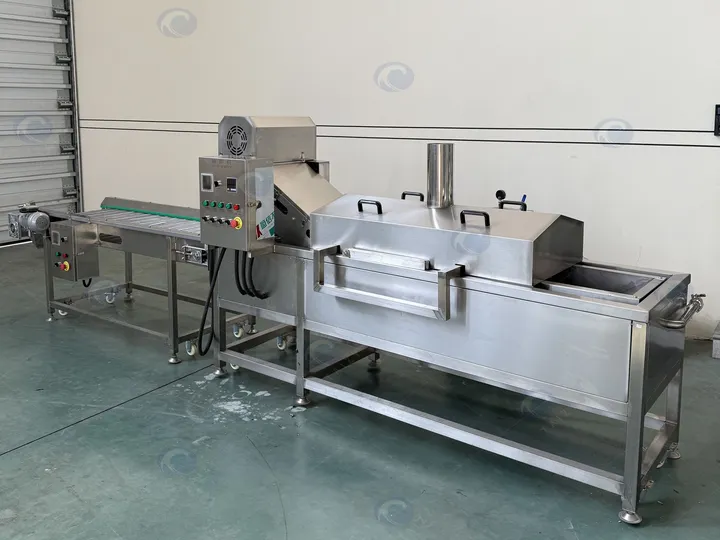
A continuous frying machine is an industrial fryer that moves food through hot oil on a conveyor belt. It fries products such as French fries, potato chips, chicken strips, and snack foods in a steady stream. Unlike batch fryers, it does not stop between loads. This design makes it ideal for factories, central kitchens, and large-scale food processors that need consistent output.
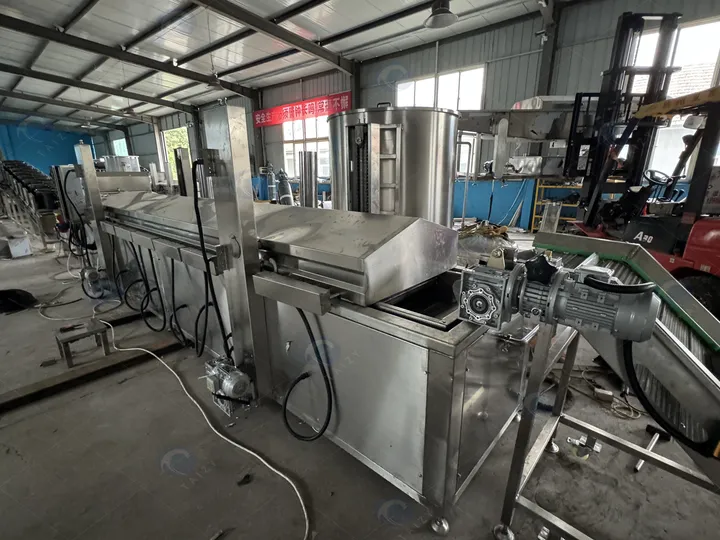
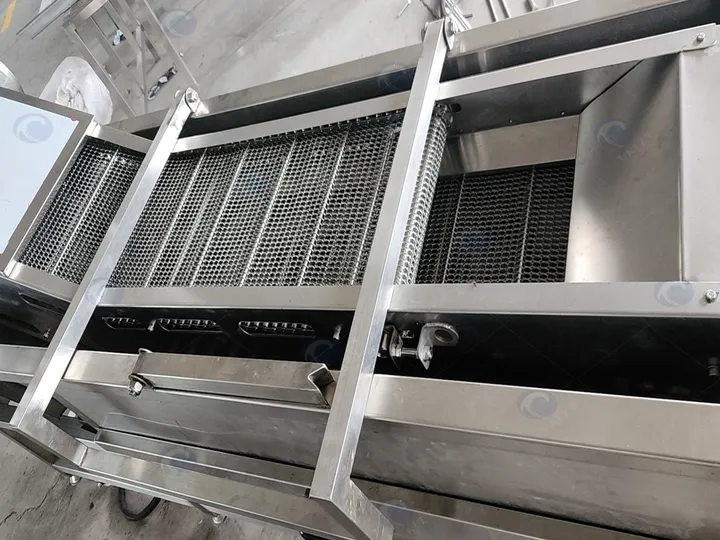
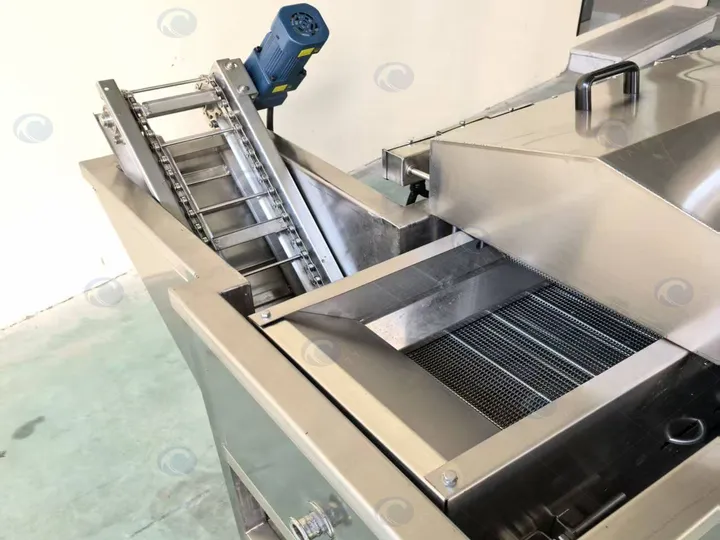
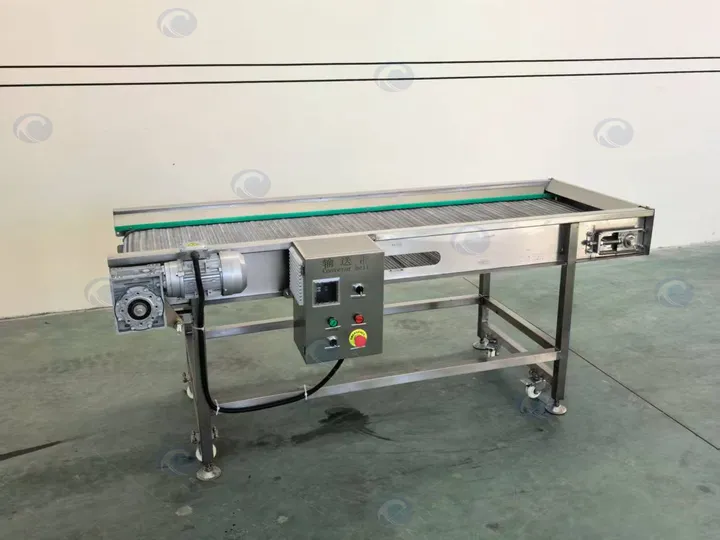
The machine usually includes a feeding conveyor, frying tank, heating system, oil circulation unit, mesh belt, and discharge outlet. Higher-end models add oil filters, cooling conveyors, and seasoning drums. These extras improve product quality but also raise the total cost.
Continuous Frying Machine Price Ranges
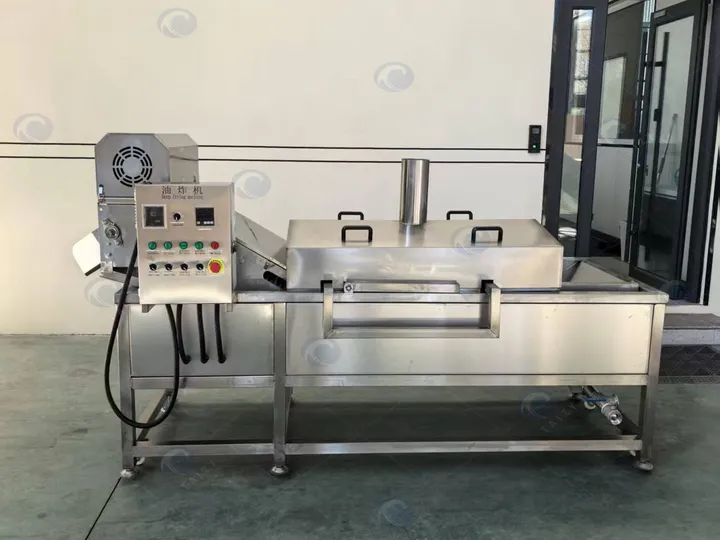
Prices fall into three main groups based on size and features.
Entry-Level Models: $10,000–18,000
Entry-level machines suit small workshops and startup snack producers. They often have belt widths of 400–600 mm and electric heating. These units handle lower output and may lack automatic oil filtration or advanced controls. They are a good starting point for businesses testing a new product line.
Mid-Range Models: $18,000–35,000
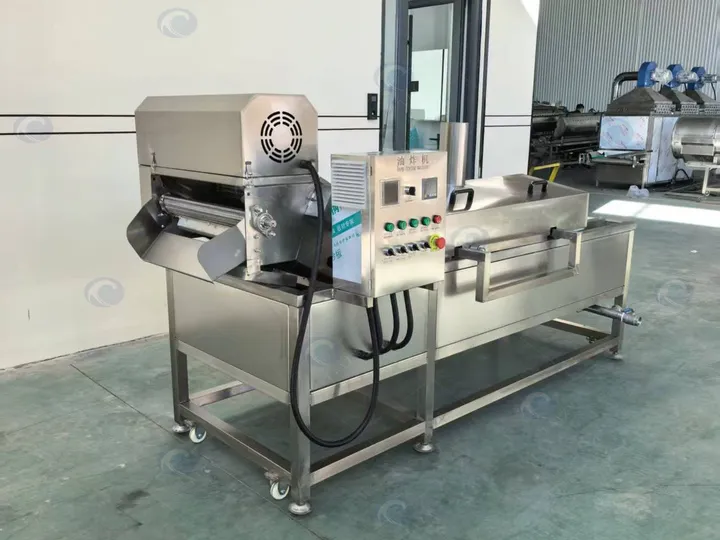
Mid-range industrial continuous fryers fit most small-to-medium factories. They usually feature 304 stainless steel construction, gas or electric heating, belt widths of 600–800 mm, and basic temperature controls. Many include oil filtration and simple conveyor speed adjustment. This range covers the most common commercial frying machine needs.
High-End Models: $35,000–50,000
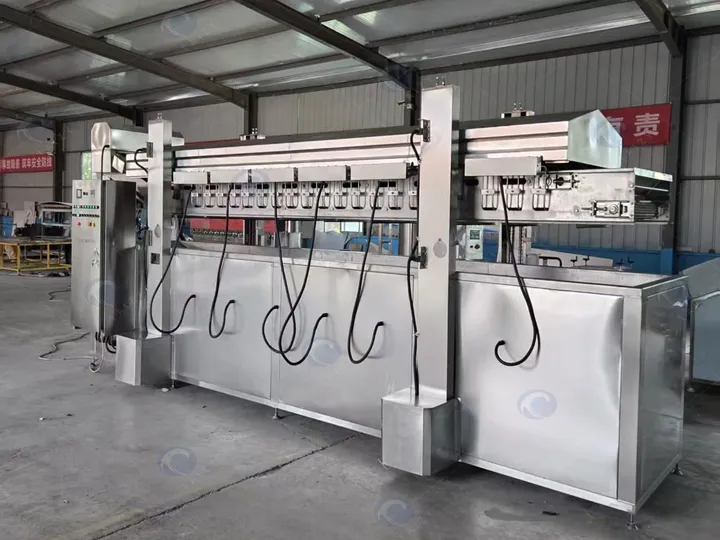
High-end automatic fryers serve large production lines. They offer wider belts (800–1,200 mm), gas heating systems, PLC controls, automatic oil filters, and integration with cooling or seasoning equipment. These machines are built for continuous high-volume output and long operating hours.
7 Factors That Affect Continuous Frying Machine Cost
1. Production Capacity
Higher-capacity machines need larger tanks, stronger motors, and wider belts. A machine rated for 500 kg/h costs more than one rated for 100 kg/h. Always match capacity to your real daily output to avoid paying for unused speed.
2. Heating Method
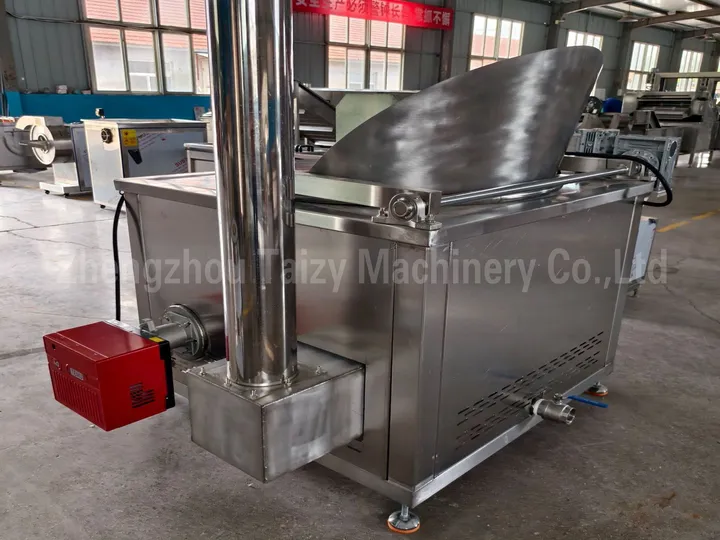
Gas-heated fryers usually cost more upfront than electric models. However, gas often has lower running costs over time. Electric units are simpler to install but may cost more to operate in regions with high electricity prices.
3. Belt Width and Length
Wider and longer belts increase the frying surface and output. They also require more stainless steel, stronger frames, and larger motors. Belt width is one of the fastest ways to separate entry-level and industrial continuous fryer prices.
4. Material Grade
Most food-contact parts use 304 stainless steel. Some machines add 316 stainless steel for salt-heavy or acidic products. Higher-grade materials raise the price but improve corrosion resistance and hygiene.
5. Automation Level
Basic fryers use manual temperature and speed controls. Automatic fryers add PLC panels, sensors, automatic feeding, and oil level control. These features reduce labor but increase the initial investment.
6. Oil Filtration System
Built-in oil filters extend oil life and improve product taste. They add cost but reduce waste and downtime. For high-volume lines, an oil filter often pays for itself within months.
7. Optional Equipment
Some buyers add cooling conveyors, deoiling machines, or seasoning drums. Each extra unit raises the total project cost. A fully automatic fryer line costs more than a standalone fryer, but it also reduces manual handling between stages.
How to Choose the Right Continuous Frying Machine for Your Budget?
Start by calculating your target daily output. Then check your available power or gas supply. A gas fryer saves fuel but needs a gas line. An electric fryer is easier to install but may cost more to run.
Next, measure your workshop space. Leave room for feeding, discharge, and operator access. Also plan for future growth. Buying a slightly larger commercial frying machine now can save you from replacing it in two years.
Finally, compare total cost of ownership. A cheaper machine may have higher energy use, shorter belt life, or no local spare parts. A well-built industrial continuous fryer often costs less over five years than a budget unit.
Looking for an Automatic Continuous Frying Machine?
A continuous frying machine typically costs between $10,000 and $50,000 in most markets. Entry-level electric fryers are usually at the lower end of the price range, while large gas-heated automatic fryers with advanced automation features are priced higher. The final cost depends on factors such as production capacity, heating method, material, and automation level.
If you are planning to build a snack production line, it is important to compare capacity, machine configuration, and total operating costs before making a decision. A reliable industrial continuous fryer can improve product quality, reduce labor requirements, and support stable long-term production.
Click the contact window on the right to get in touch with us. We will provide you with a quotation within 24 hours.