
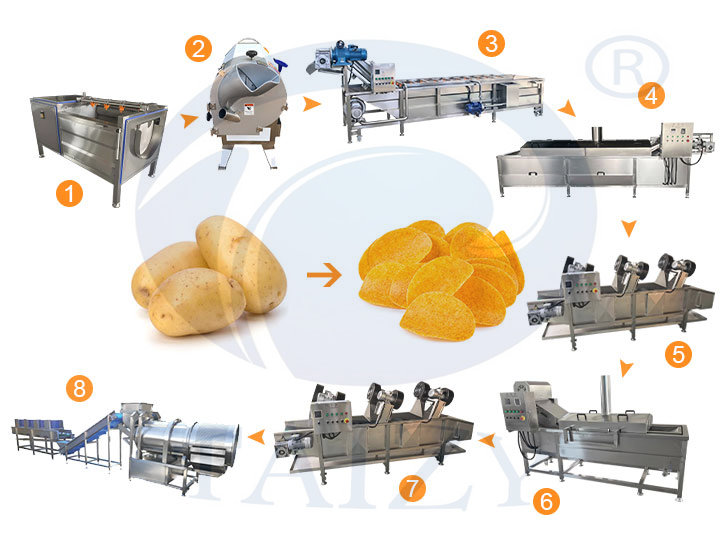
A fully automatic potato chip production line is an end-to-end processing system engineered for high-volume, continuous snack manufacturing with minimal labor intervention. This industrial-grade configuration delivers an output of 200 to 300 kilograms of finished potato chips per hour, making it the ideal solution for established food manufacturers, large-scale snack brands, and export-oriented production facilities seeking to maximize throughput while maintaining consistent product quality.
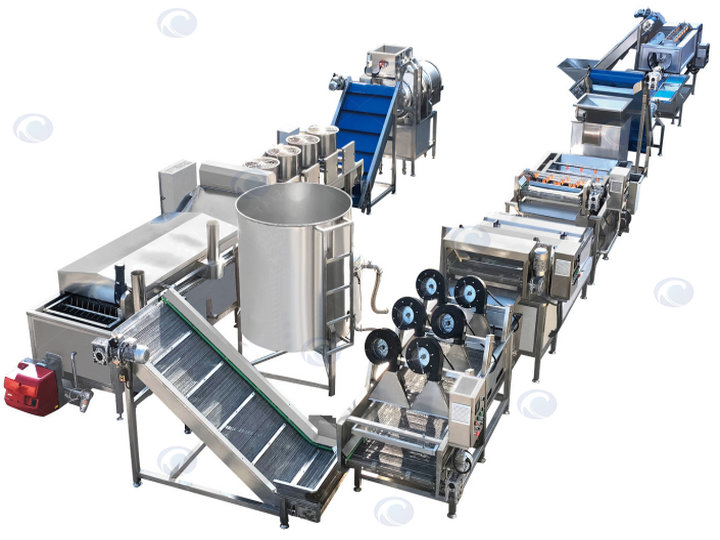
Unlike semi-automatic systems that require operators to transfer materials between stages, this automatic potato chip processing line operates as a seamless, integrated workflow. Raw potatoes enter at the infeed point and emerge as seasoned, packaged chips at the discharge end with no manual handling required during processing.
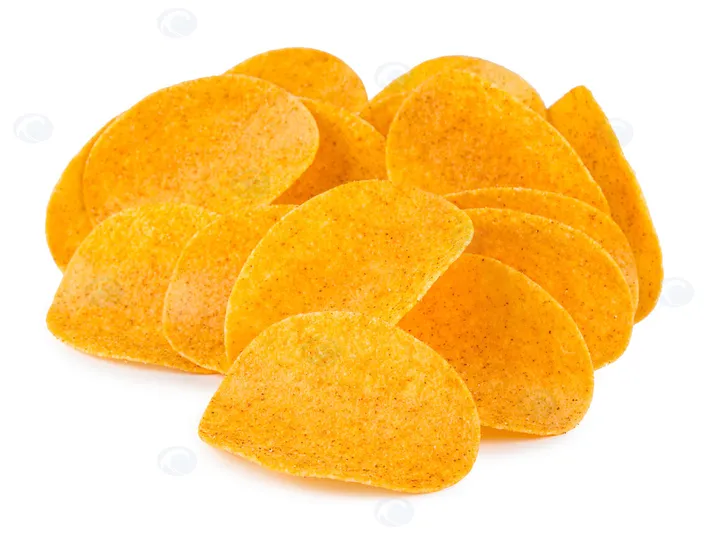
The entire system comprises 14 specialized machine units, all fabricated from SUS304 food-grade stainless steel to meet stringent international hygiene standards and withstand the demands of continuous industrial operation.
Complete Equipment Configuration and Technical Specifications
| Equipment Name | Detailed Parameters |
|---|---|
| Feeding Elevator | Dimensions: 2500 × 1050 × 1400 mm Belt Width: 800 mmPower: 0.75 kW Material: 304 Stainless Steel Quantity: 4 units |
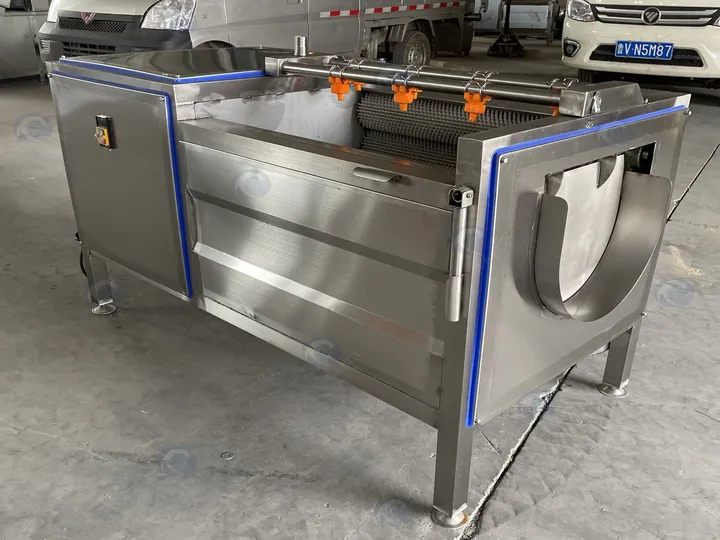
| Washing & Peeling Machine | Dimensions: 3000 × 850 × 900 mm Brush Roller Length: 2000 mm Power: 4 kW Material: 304 Stainless Steel |
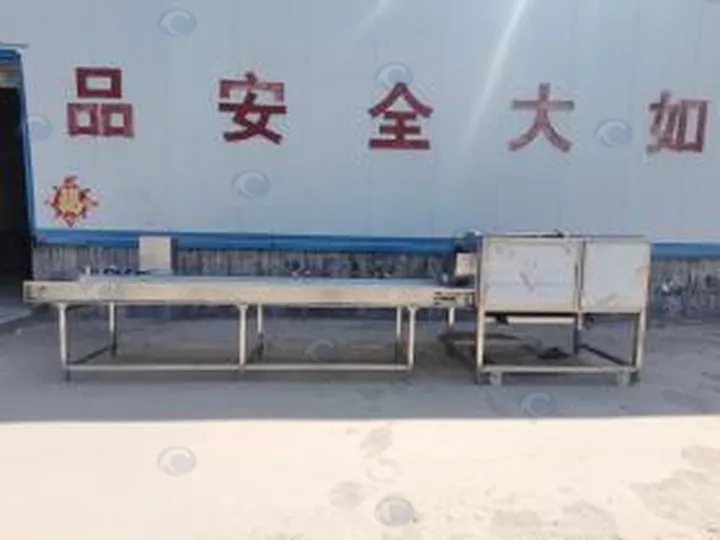
| Picking Table | Dimensions: 3500 × 1050 × 800 mm Belt Width: 800 mm Power: 0.75 kW Material: 304 Stainless Steel |
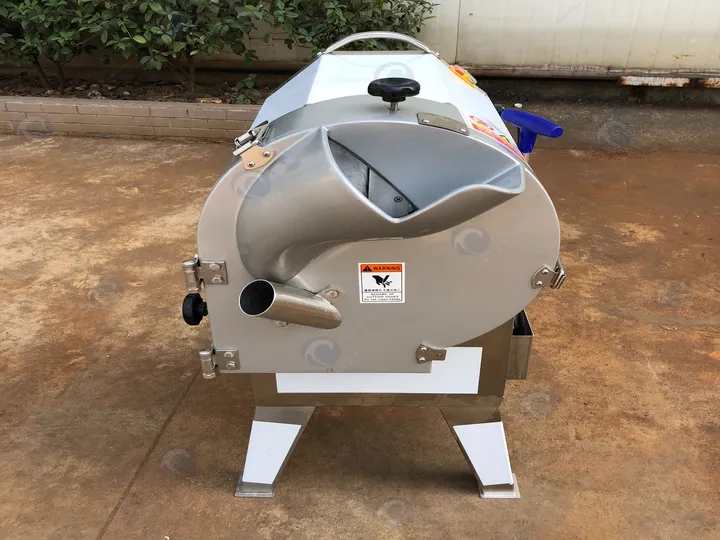
| Cutting Machine | Dimensions: 600 × 500 × 900 mm Slice Thickness: 2–9 mm Power: 1.5 kW Material: 304 Stainless Steel |
| Bubble Washing Machine | Dimensions: 6000 × 1250 × 1300 mm Mesh Belt Width: 800 mm Power: 9 kW Material: 304 Stainless Steel |
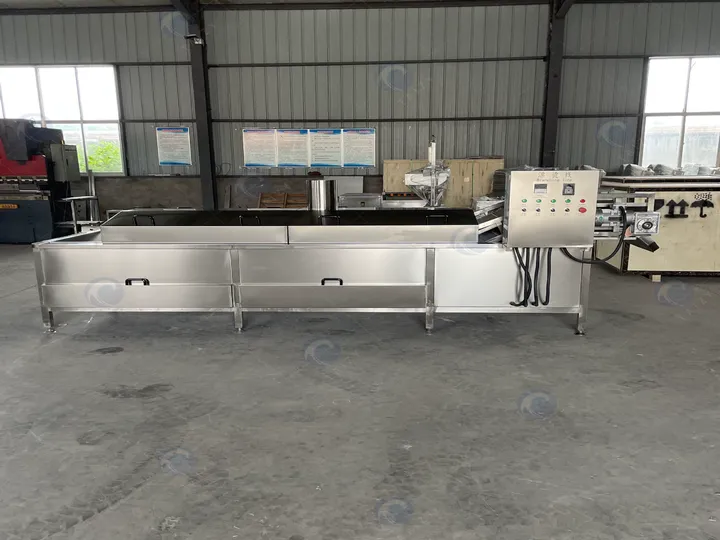
| Blanching Machine | Dimensions: 6000 × 1150 × 1250 mm Mesh Belt Width: 800 mm Electric Heating Power: 170 kW Material: 304 Stainless Steel |
| Air Dryer | Dimensions: 6000 × 1100 × 1100 mm Mesh Belt Width: 800 mm Number of Fans: 6 sets Power: 7.5 kW Material: 304 Stainless Steel Quantity: 2 units |
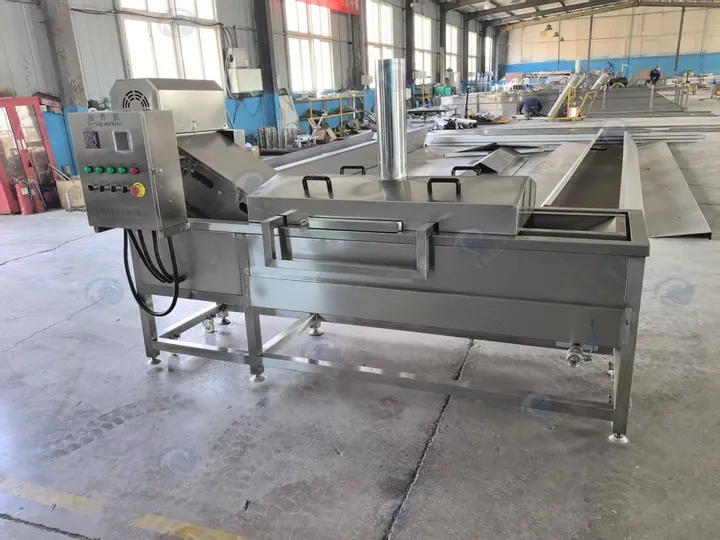
| Electric Frying Machine (with oil storage tank) | Dimensions: 6000 × 1150 × 1550 mm Mesh Belt Width: 800 mm Electric Heating Power: 160 kW Material: 304 Stainless Steel |
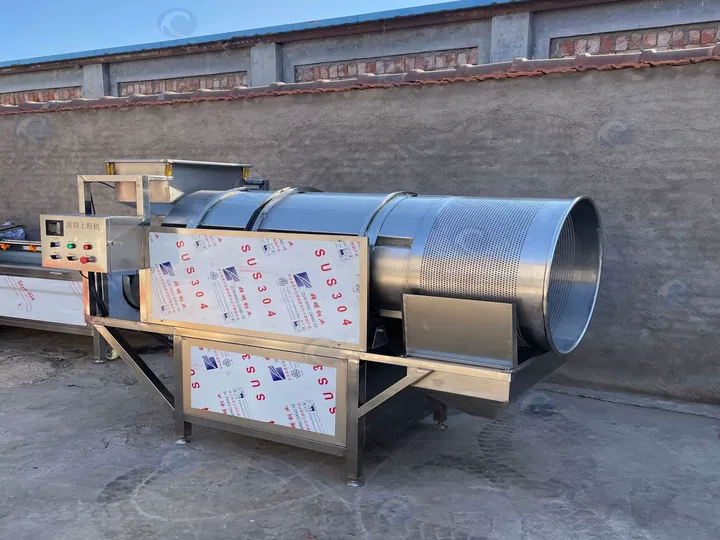
| Seasoning Machine | Dimensions: 2600 × 1050 × 1550 mm Drum Diameter: 900 mm Drum Length: 2400 mm Power: 3 kW Material: 304 Stainless Steel |
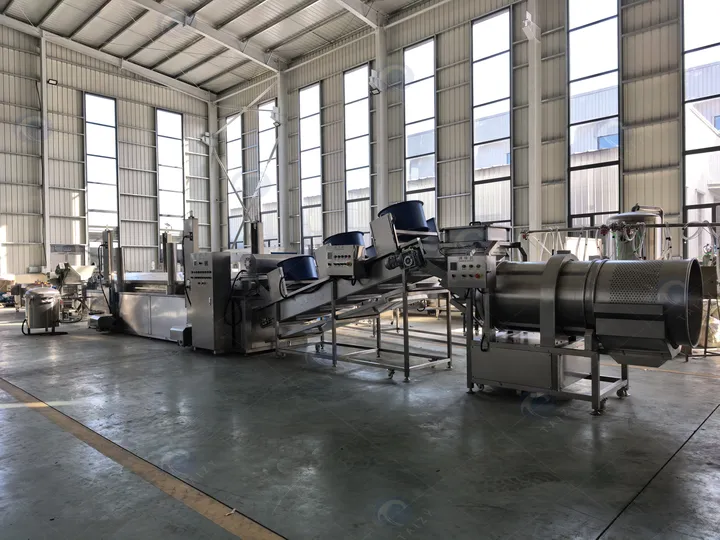
How Does a Fully Automatic Potato Chip Processing Line Work?
The fully automatic potato chip production line operates through a continuous processing sequence, ensuring stable product quality, high efficiency, and minimal manual handling. From raw potato feeding to final packaging, each machine is connected by conveyors and elevators to create a seamless production workflow.
Step 1: Potato Feeding and Washing & Peeling
Machines Used: Feeding Elevator + Brush Washing and Peeling Machine
Fresh potatoes are first transported by the feeding elevator into the brush washing and peeling machine. Equipped with heavy-duty brush rollers and a water spray system, the machine effectively removes dirt, mud, and potato skins while thoroughly cleaning the surface. This step prepares the raw material for subsequent processing and ensures hygienic production conditions.
Step 2: Manual Sorting and Inspection
Machine Used: Sorting Conveyor
After washing, the potatoes are transferred to the sorting conveyor, where operators inspect and remove damaged, green, or defective potatoes as well as any foreign materials. This quality control stage helps ensure consistent product appearance and protects downstream equipment.
Step 3: Potato Slicing
Machine Used: Potato Slicing Machine
Selected potatoes enter the slicing machine, which cuts them into uniform slices with adjustable thickness. Consistent slice dimensions are critical for achieving even blanching, drying, and frying results, ultimately improving the texture and appearance of the finished chips.
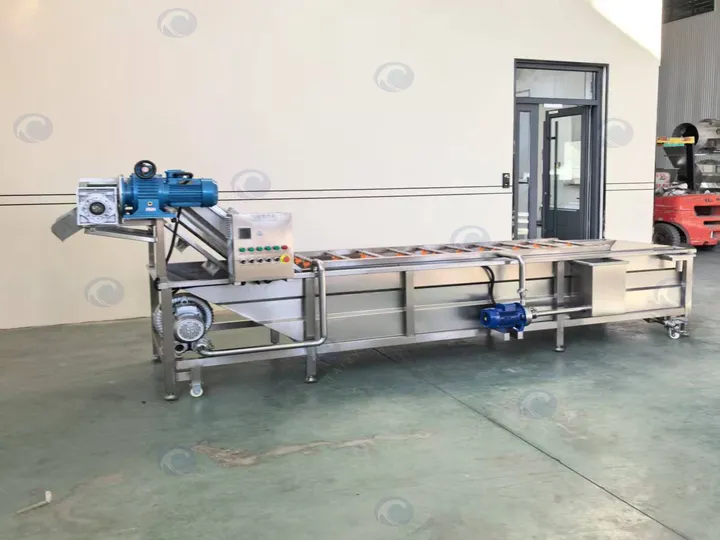
Step 4: Bubble Washing
Machine Used: Bubble Washing Machine
The freshly cut potato slices pass through a bubble washing machine. Air bubbles create gentle water agitation that removes excess surface starch generated during slicing. This process prevents slices from sticking together and helps produce chips with a brighter color and crispier texture.
Step 5: Blanching
Machine Used: Blanching Machine
The washed slices are conveyed into the blanching machine, where they undergo controlled hot-water treatment. Blanching helps deactivate enzymes responsible for discoloration, improves chip color consistency, and prepares the slices for efficient frying.
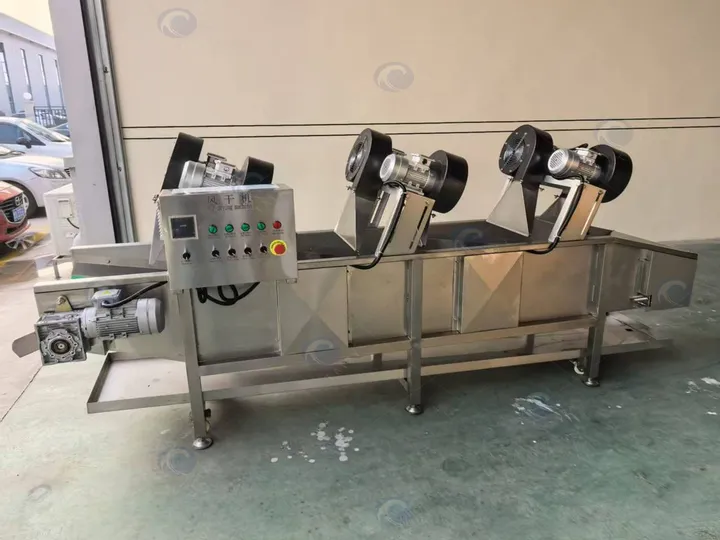
Step 6: Air Drying Before Frying
Machine Used: Air Drying Machine
After blanching, the potato slices enter the air drying machine. Multiple high-speed fans remove excess surface moisture, reducing oil splashing during frying and helping maintain stable frying conditions while improving oil utilization efficiency.
Step 7: Continuous Frying
Machines Used: Feeding Elevator + Continuous Frying Machine
The dried potato slices are automatically lifted by an elevator and fed into the continuous frying machine. Under precisely controlled oil temperatures, the slices are fried evenly until they develop their characteristic golden color, crispy texture, and rich potato flavor.
Step 8: Oil Removal and Cooling
Machine Used: Air Drying Machine
After frying, the chips pass through a second air drying machine, which removes excess surface oil and assists in cooling the product. This step improves the final taste, reduces greasiness, and prepares the chips for seasoning.
Step 9: Seasoning and Flavoring
Machines Used: Feeding Elevator + Drum Seasoning Machine
Qualified chips are transported by an elevator into the drum seasoning machine. As the drum rotates, salt, flavor powders, or other seasonings are evenly applied to the chip surface, ensuring consistent taste throughout the batch.
Production Flow
Feeding Elevator → Brush Washing & Peeling Machine → Sorting Conveyor → Potato Slicing Machine → Bubble Washing Machine → Blanching Machine → Air Drying Machine → Feeding Elevator → Continuous Frying Machine → Air Drying Machine → Sorting Conveyor → Feeding Elevator → Drum Seasoning Machine → Packaging Machine

What Are the Key Advantages of a Fully Automatic Potato Chip Production Line?
Labor Efficiency
Unlike semi-automatic production lines that require operators to manually transfer materials between processing stages, this fully automatic potato chip production line utilizes elevators and conveyors for continuous product movement. Operators mainly perform monitoring and quality inspection tasks, reducing labor requirements and improving overall production efficiency.
Production Consistency
Automated conveyor speeds, precise temperature controls, and standardized processing times ensure that potato slices receive uniform washing, blanching, drying, frying, and seasoning treatment. This helps maintain consistent chip color, texture, and flavor from batch to batch.
Product Quality Stability
Uniform slice thickness (2–9 mm adjustable), controlled blanching conditions, and stable frying temperatures help minimize quality variations during production. Consistent processing parameters reduce the occurrence of undercooked, overcooked, or unevenly colored chips, resulting in a more uniform finished product and higher product yield.
Hygiene and Safety
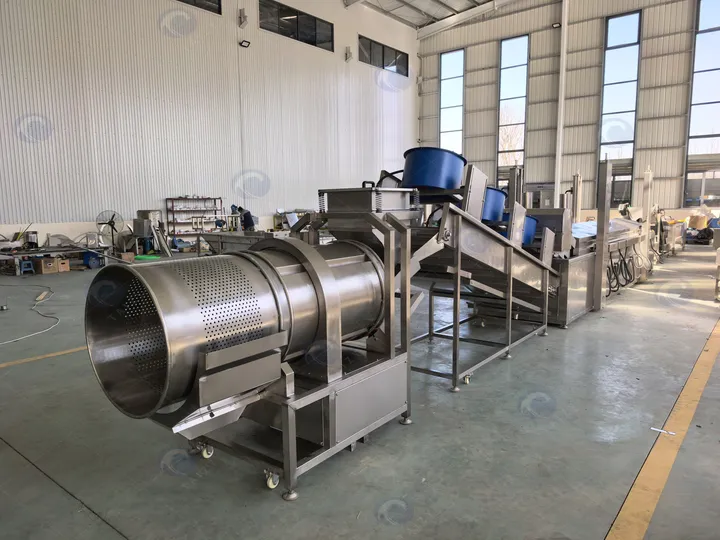
Minimal human contact with the product throughout processing helps reduce contamination risks. All food-contact components are manufactured from SUS304 stainless steel, which complies with food processing hygiene requirements and allows convenient cleaning and sanitation. Enclosed processing sections also improve operator safety around high-temperature equipment.
Scalability
With a finished product capacity of 200–300 kg/h, the line can produce approximately 1.6–2.4 tons of potato chips during an 8-hour shift. This output level is suitable for medium- and large-scale snack manufacturers supplying supermarkets, distributors, food service companies, and regional markets.
Continuous Production Efficiency
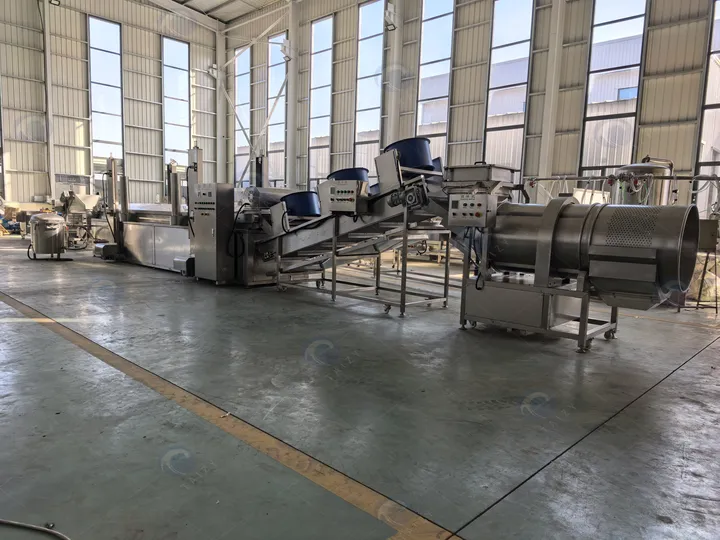
The integrated production flow allows washing, slicing, blanching, drying, frying, seasoning, and packaging to operate continuously rather than in separate batches. Continuous processing reduces waiting time between stages, improves equipment utilization, and enables stable production throughout the working shift.
Why Choose Taizy for Your Potato Chip Production Project?
Certified Manufacturing Standards
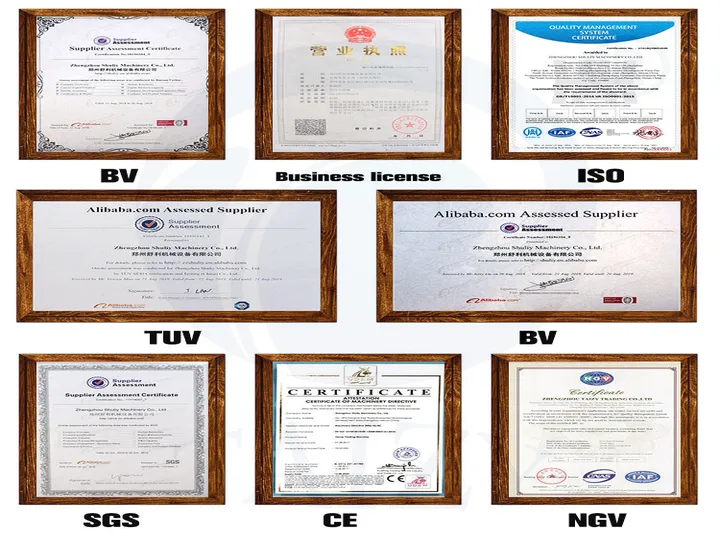
Taizy places strong emphasis on product quality and manufacturing consistency. Our production processes comply with internationally recognized quality management standards, and our equipment has obtained certifications such as CE and ISO 9001, helping customers meet local import and operational requirements.
Exported to More Than 100 Countries
Taizy machinery has been supplied to customers in over 100 countries and regions worldwide, including markets in Asia, Africa, Europe, South America, the Middle East, and Oceania. Extensive export experience enables us to understand different voltage standards, food processing requirements, and shipping regulations across global markets.
Customized Processing Solutions
Every potato chip factory has different production targets, factory layouts, and budget requirements. Taizy provides customized equipment configurations, line layouts, and supporting solutions based on actual customer needs to maximize production efficiency and equipment utilization.
Food-Grade Equipment Construction
All food-contact components are manufactured from SUS304 stainless steel, providing excellent corrosion resistance, durability, and compliance with food processing hygiene standards. The equipment is designed for long-term continuous industrial operation.
Complete Technical Support
From project consultation and factory layout planning to installation guidance and operator training, Taizy offers comprehensive technical support throughout the entire project lifecycle, helping customers reduce setup time and accelerate production startup.
Reliable Global After-Sales Service
With years of international project experience, Taizy provides ongoing technical assistance, spare parts support, maintenance guidance, and troubleshooting services to help customers maintain stable and efficient production.
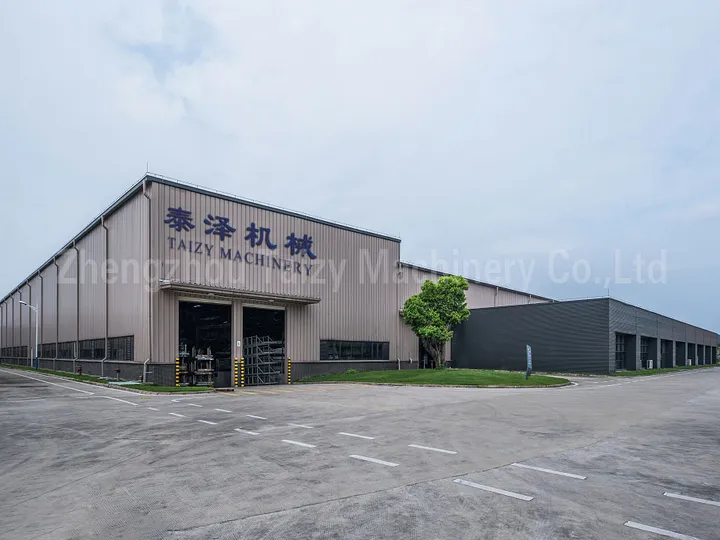
Partner with an Experienced Potato Chip Line Manufacturer
Backed by international certifications, extensive export experience, and professional technical support, Taizy provides reliable potato chip production solutions for customers seeking efficient, scalable, and long-term food processing operations.
FAQ – Fully Automatic Potato Chip Production Line
What factory size is required for a 200–300 kg/h potato chip production line?
A minimum workshop area of about 300–500 m² is usually required. If you include raw material storage, packaging space, and oil handling area, a total of 500–800 m² is recommended for stable industrial operation and future expansion.
How many workers are needed to run a fully automatic potato chip production line?
Typically, 4–6 workers per shift are enough, including operators for monitoring, raw material handling, quality inspection, and packaging. The automation system significantly reduces manual labor compared with semi-automatic production.
What kind of potatoes are suitable for making chips?
High dry-matter potatoes with low sugar content are most suitable. Fresh, firm potatoes without sprouting are preferred to ensure crispy texture, light color, and low oil absorption in the final chips.
How much oil is required to operate a potato chip production line?
The initial oil filling generally ranges from 1,000 to 2,000 liters depending on configuration. With a circulation and filtration system, oil can be reused multiple times, reducing overall consumption and operating cost.
What is the total power consumption of the production line?
A 200–300 kg/h potato chip production line typically requires around 180–300 kW installed power. The frying and heating sections account for the majority of energy usage.
Can the production line make different types of potato chips?
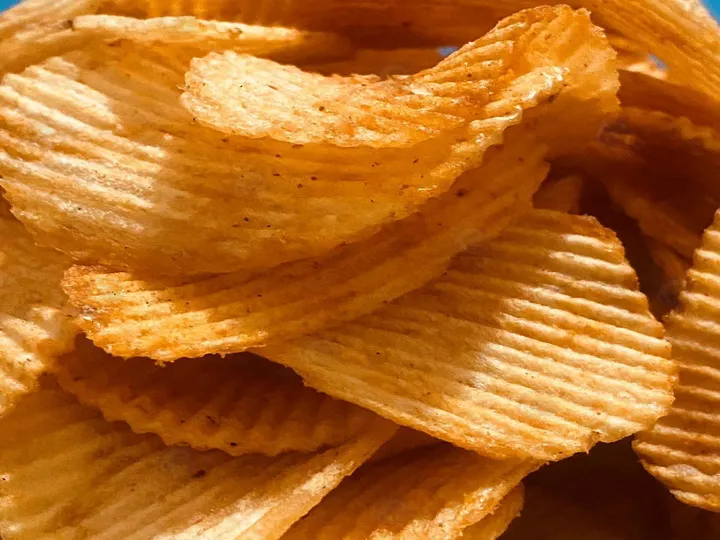
The line mainly produces standard sliced potato chips. However, slice thickness can be adjusted within a certain range. For ridged or special-shaped chips, additional forming equipment is required.
What is the shelf life of the finished potato chips?
With proper packaging such as vacuum or nitrogen filling, the shelf life of potato chips can reach 6–12 months depending on storage conditions and packaging quality.
Which heating method is better, gas or electric?
: Electric heating is easier to install and offers precise temperature control, while gas heating is more cost-efficient for long-term high-volume production. The choice depends on local energy costs and factory conditions.
How often does the frying oil need to be replaced?
Under normal industrial use, oil is filtered daily and partially or fully replaced every 7–15 days depending on production intensity and oil quality management.
What raw material quality issues can affect chip production?
Potatoes with high sugar content or low dry matter can cause dark-colored chips, excessive oil absorption, and poor crispiness. Proper raw material selection is essential for stable product quality.
Can the production line be upgraded in the future?
Yes, the system is modular and can be expanded by adding extra capacity units, upgrading frying systems, or integrating automatic packaging and seasoning modules as production demand increases.
What happens if the machine stops suddenly during production?
The system includes safety controls such as temperature protection and emergency shutdown functions. Operators should clear material flow promptly to prevent oil degradation or blockage.
Can the line support flavored potato chips production?
Yes, additional seasoning and coating systems can be integrated to produce flavored chips such as BBQ, cheese, spicy, and other customized flavors.