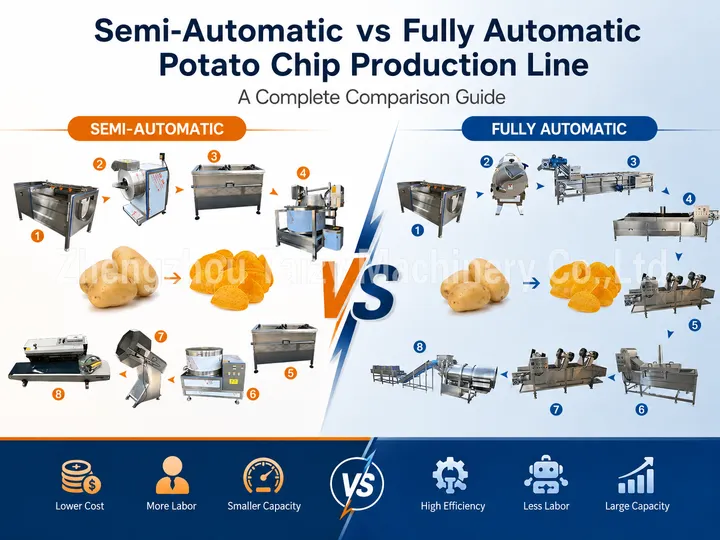
Choosing between a semi-automatic and a fully automatic potato chip processing line is one of the first major decisions entrepreneurs and food manufacturers face when entering the snack industry. While both configurations transform raw potatoes into packaged chips, they differ significantly in throughput, labor requirements, and initial investment.
A semi-automatic potato chip processing line typically delivers 50–100 kg/h with moderate operator involvement, making it an ideal small-scale chips equipment choice for startups and local factories. A fully automatic potato chip processing line produces 200–300 kg/h through continuous, hands-free workflow, positioning it as the heavy-duty potato chip manufacturing equipment for established brands and export facilities.
Understanding these distinctions ensures you invest in a potato chips making machine configuration that aligns with your budget, labor resources, and growth targets.

Production Capacity and Throughput
Capacity is the most visible difference between these two potato chip processing line options. The semi-automatic system is engineered for small to medium-scale operations. With an output of 50–100 kg/h, it suits businesses that serve local markets, institutional cafeterias, or niche retail channels. Its modular design allows you to add or remove units as demand changes, providing valuable flexibility during the early growth phase.
In contrast, the fully automatic potato chip processing line operates at industrial scale. Producing 200–300 kg/h, it can generate approximately 1.6–2.4 tons of finished chips in a single 8-hour shift. This level of throughput meets the demands of supermarkets, distributors, and regional export markets. If your business plan depends on high-volume, continuous output, the automatic system is the clear choice.
Automation Level and Labor Requirements
Automation directly impacts staffing costs and operational consistency.
On a semi-automatic potato chip processing line, operators manually move product between stages—such as from the slicer to the washing machine, or from the fryer to the seasoning drum. This setup reduces upfront capital expenditure but requires more hands on the production floor.
The fully automatic system eliminates manual handling during production. Elevators and conveyors transport raw potatoes from the infeed point through washing, peeling, slicing, blanching, drying, frying, seasoning, and packaging without interruption. Workers primarily monitor equipment performance and conduct quality inspections rather than physically moving materials.
For regions with high labor costs or limited workforce availability, this automation within the potato chip processing line delivers substantial long-term savings.
Equipment Configuration Comparison
Both lines share core processes, but the fully automatic potato chip processing line includes additional specialized units to maintain continuous flow.
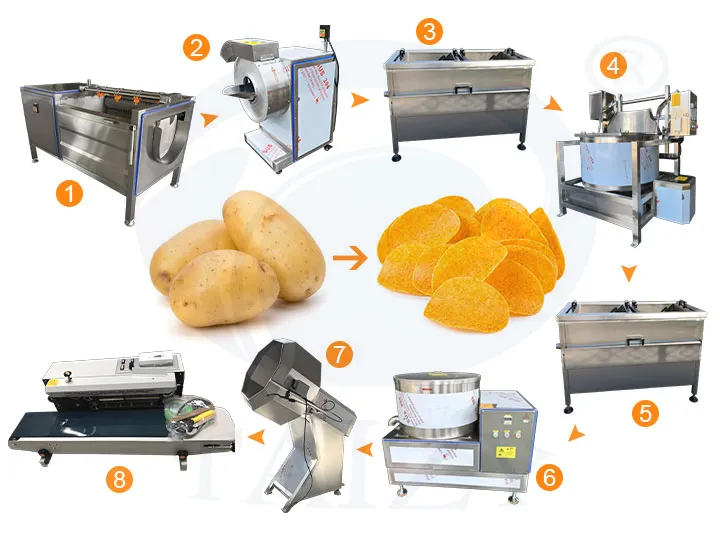
A semi-automatic potato chip making line configuration generally includes eight purpose-built machines:
- Washing and peeling unit
- Chip slicer
- Electric blanching machine
- Vibrating dewatering unit
- Electric fryer
- Vibrating deoiler
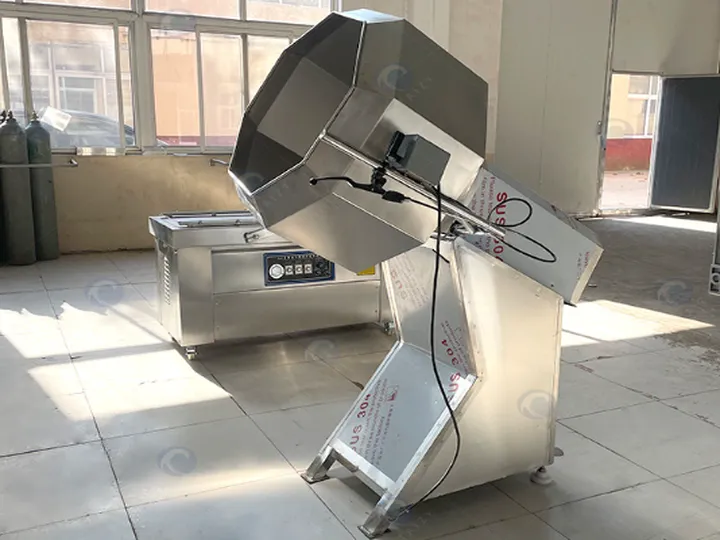
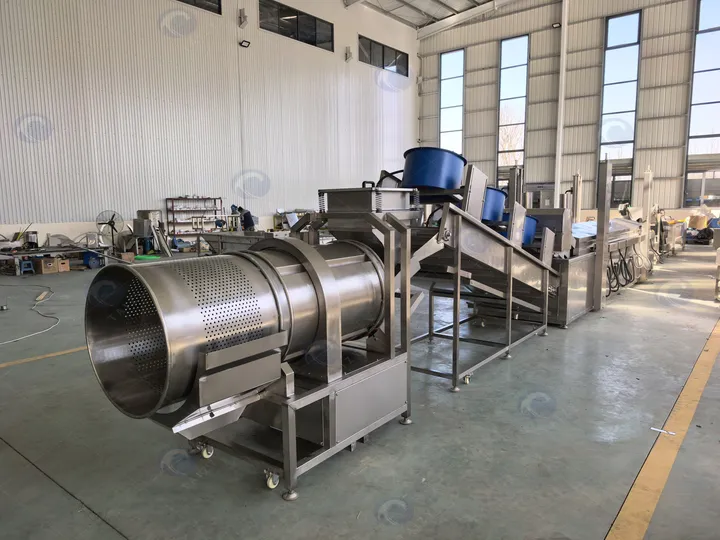
- Drum seasoning machine
- Continuous sealing machine
This compact footprint fits facilities with limited floor space and makes installation straightforward.
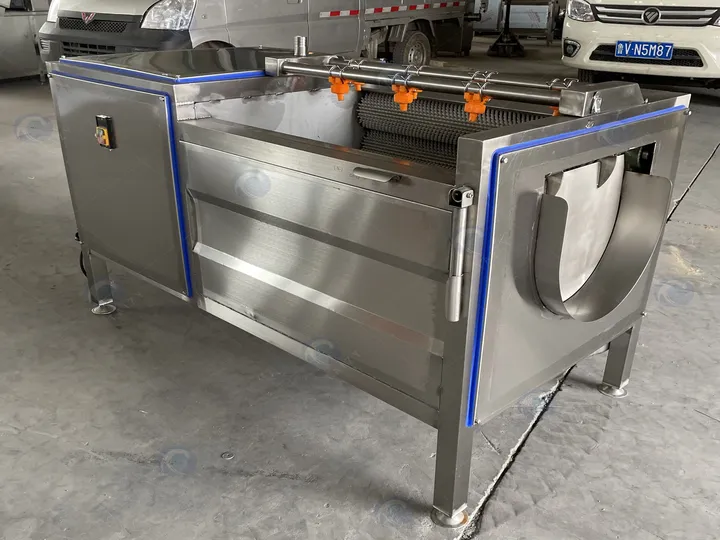
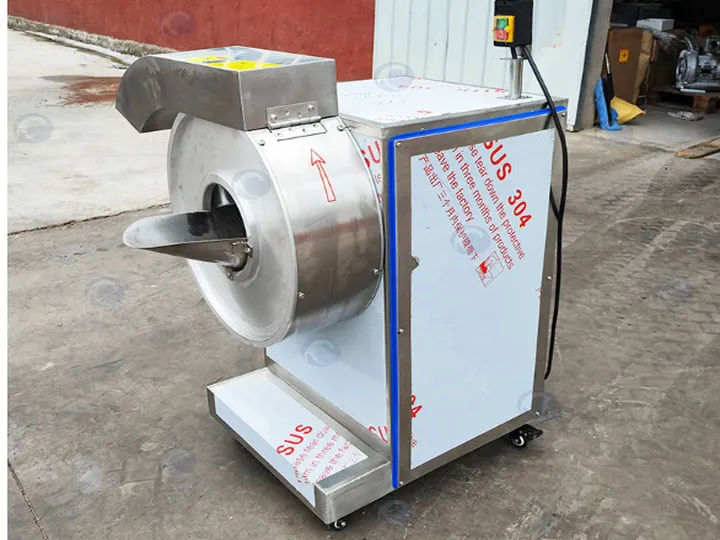
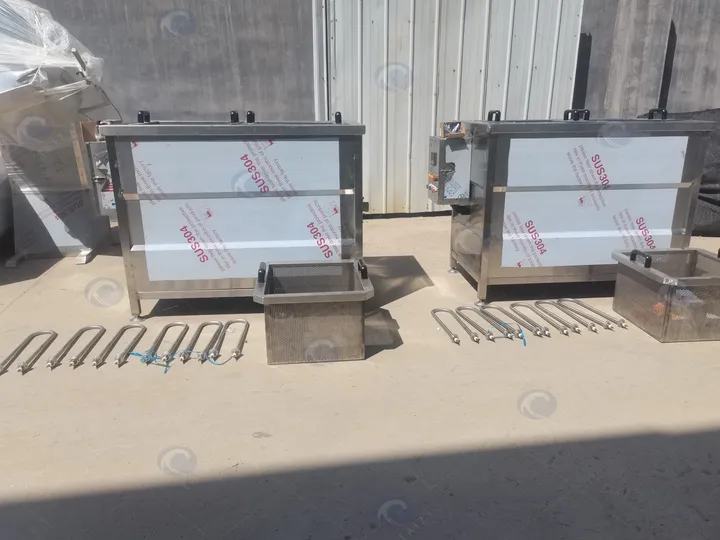
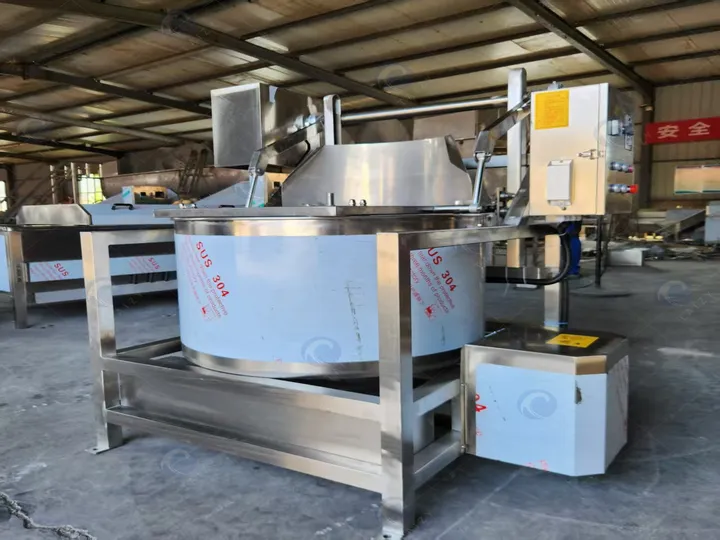
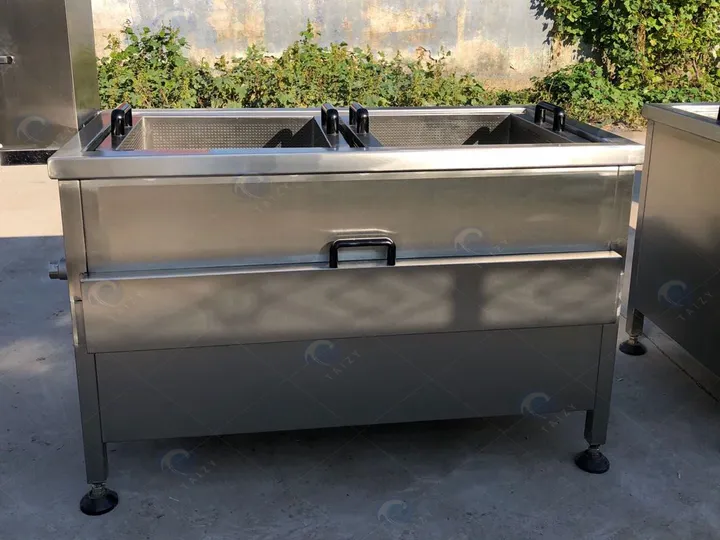
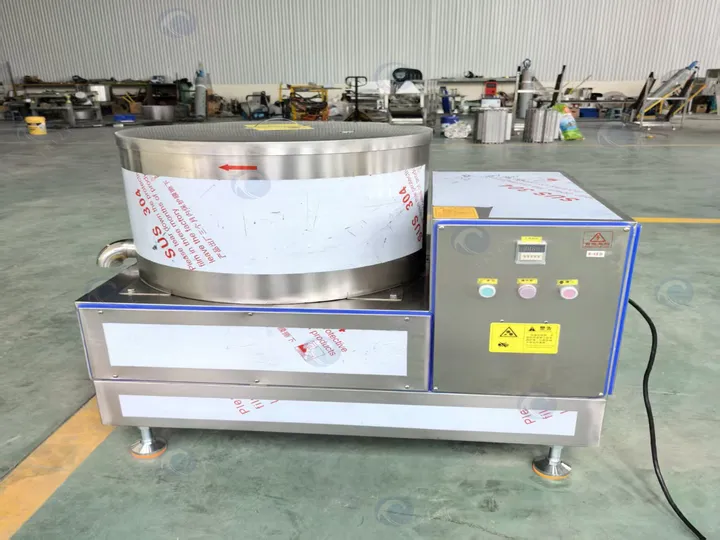
The fully automatic potato chip processing line comprises fourteen specialized machine units, including multiple feeding elevators, a bubble washing machine, air drying systems before and after frying, and an integrated packaging station.
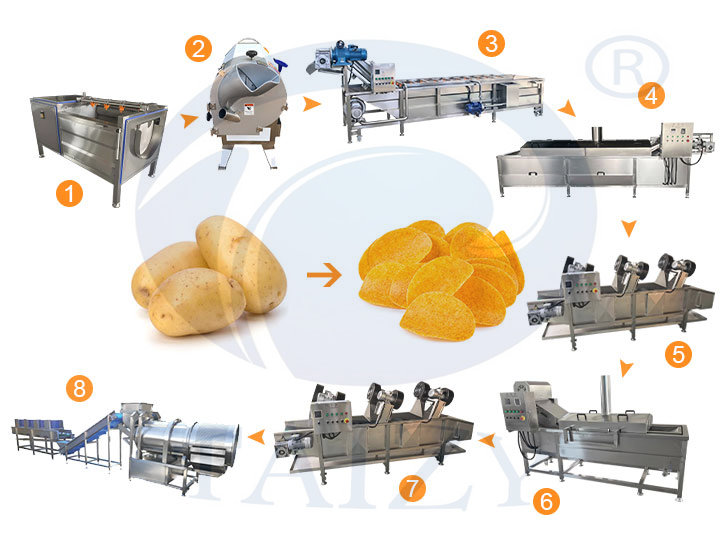
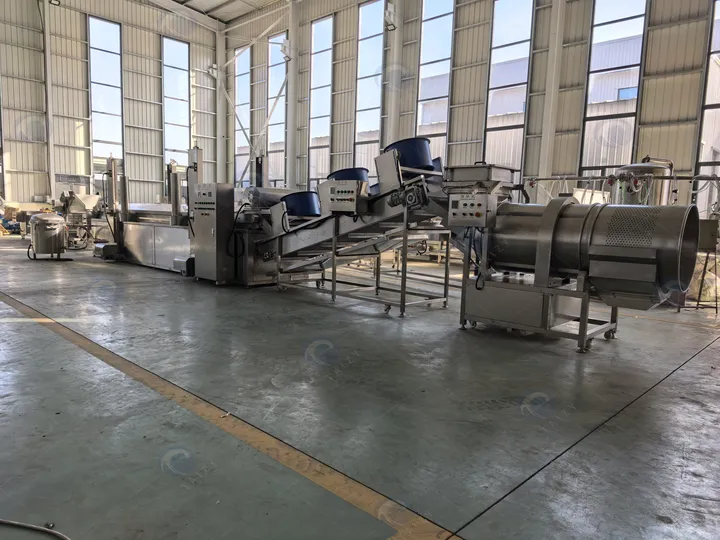
Every component is fabricated from SUS304 food-grade stainless steel to meet stringent international hygiene standards. The additional equipment ensures that each stage operates in sync, reducing waiting time and maximizing utilization of your potato chip manufacturing equipment.
Target Audience and Use Cases
Your current business stage should guide the selection of the right potato chip processing line.
Choose a semi-automatic line if you are:
- Launching a startup snack venture with limited initial capital
- Operating a small food processing plant serving local markets
- Running a hotel, restaurant, or institutional central kitchen
- Testing new chip flavors or market demand before scaling
- Managing a small-scale export facility with moderate order volumes
Choose a fully automatic line if you are:
- An established food manufacturer expanding snack production
- A large-scale snack brand supplying national or international distributors
- An export-oriented facility requiring consistent product quality at high volume
- A business seeking to minimize labor dependency and maximize throughput
- A producer targeting supermarket chains and food service companies
Side-by-Side Comparison
| Feature | Semi-Automatic Line | Fully Automatic Line |
|---|---|---|
| Output Capacity | 50–100 kg/h | 200–300 kg/h |
| Daily Output (8 hrs) | ~400–800 kg | ~1,600–2,400 kg |
| Automation Level | Stage-to-stage manual transfer | Continuous, hands-free flow |
| Number of Machines | 8 core units | 14 specialized units |
| Labor Requirement | Moderate operator involvement | Minimal handling; mostly monitoring |
| Floor Space | Compact; ideal for limited space | Larger footprint for full workflow |
| Initial Investment | Lower entry cost | Higher capital requirement |
| Best For | Startups, small factories, central kitchens | Established brands, export facilities |
| Material Grade | Full 304 stainless steel | Full SUS304 food-grade stainless steel |
| Heating Options | Electric standard; gas optional | Electric or gas heating available |
| Warranty | 24-month warranty support | Standard manufacturer warranty |
How to Choose the Right Potato Chip Processing Line for Your Business
Budget is often the deciding factor, but it should not be the only one.
Consider your 3-year production forecast. If you plan to grow from local retail to regional distribution within two years, a fully automatic potato chip processing line may save you from costly replacement or retrofitting later. However, if you are validating a new market or operating with constrained cash flow, a semi-automatic system offers an affordable entry point without sacrificing food safety or product quality.
Also evaluate your local labor market. In regions where skilled operators are plentiful and wages are low, semi-automatic potato chip-making machine setups can be highly profitable. In markets with high labor costs or strict workplace safety regulations, the reduced staffing needs of an automatic system often justify the higher upfront investment.
Finally, assess your facility constraints. The semi-automatic line’s compact layout fits into smaller workshops, making it practical small-scale chips equipment for urban or existing buildings. The fully automatic configuration requires dedicated space for conveyors, elevators, and continuous fryers.
Frequently Asked Questions
Can I upgrade from a semi-automatic line to a fully automatic line later?
Yes. Many manufacturers design modular potato chip manufacturing equipment that allows you to add conveyors, elevators, and additional processing units over time. Consulting your supplier during the initial purchase ensures future upgrades remain compatible.
Which potato chip processing line offers better ROI for a new business?
For unproven markets, the semi-automatic line typically delivers faster ROI due to its lower capital requirement. Once demand stabilizes above 150 kg/h, the labor savings and efficiency gains of a fully automatic potato chip processing line usually generate superior long-term returns.
Do both lines use the same raw materials?
Yes. Both configurations process fresh potatoes such as Atlantic, Snowden, and Russet Burbank varieties. The key difference lies in how efficiently each potato chip processing line handles volume, not in raw material compatibility.
Conclusion
Both the semi-automatic and fully automatic potato chip processing line represent solid investments—provided they match your operational reality.
Startups and small-scale manufacturers benefit from the lower cost, compact footprint, and operational simplicity of the semi-automatic system. Growing brands and export-focused facilities gain competitive advantage from the continuous throughput, labor efficiency, and scalability of the fully automatic solution.
If you are unsure which potato chip manufacturing equipment suits your project, contact our engineering team for a free consultation and customized layout proposal tailored to your space, budget, and production targets.